
The Mindset Gap Between Wanting to Succeed and Planning to.
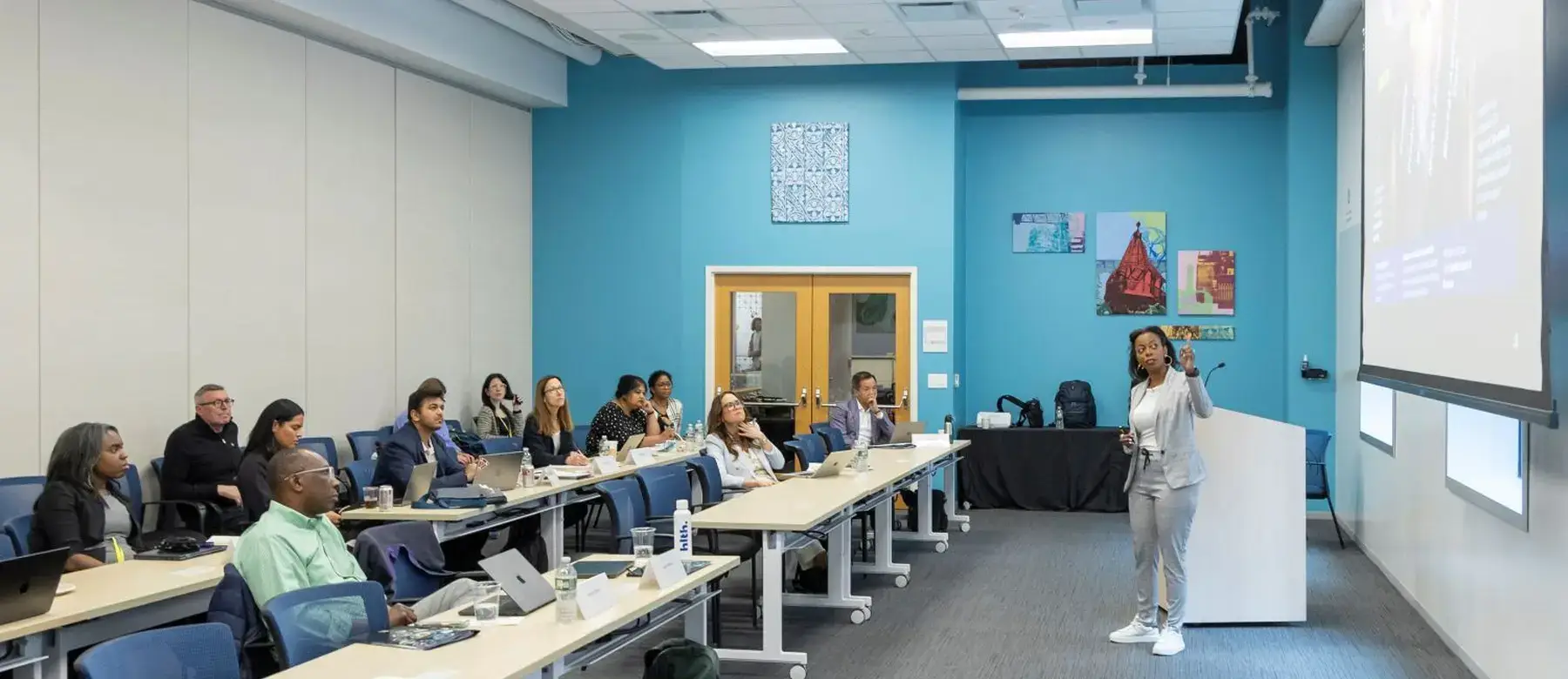
After 3 days at MedTech Innovator Radar Forum, I caught myself thinking something I didn’t expect to takeaway. To set the stage and to be clear, MTI is one of the few places where founders are exposed to real ecosystem expertise from regulatory, clinical, reimbursement, commercial, investor perspective — all in one room. In fact, this my third year partnering with MTI as a judge, mentor, and this year as an Expert Session host. And I came home and thought something I’ve never thought before:
Maybe early-stage founders don’t actually want to win. Maybe they just want to be right.
I sat with that for a while. Because it bothered me. And because it wasn’t an entirely fair statement. But it wasn’t entirely wrong either.
These Founders are the Best of the Best!
These were not casual dreamers. These were brilliant scientists, accomplished clinicians, genius engineers, and pedigreed entrepreneurs who have dedicated years, sometimes decades, to solving real problems that affect real patients.
The science was serious. The passion was undeniable. The commitment to impact was, in many cases, genuinely moving. And yet. In conversation after conversation, when strategy came up – specifically regulatory strategy, clinical strategy, commercialization strategy – the resistance was almost universal.
Not hostile. Not dismissive. Just… not ready.
Three Patterns I Couldn’t Ignore
After enough pitches and 1:1 conversations, I stopped being surprised and started taking notes. The resistance wasn’t random. It fell into three very specific camps.
#1) “When I close this round, I can afford it.” This was the most common response. And on the surface, it sounds reasonable. Funds are limited. Priorities exist. I understand that.
But here’s what most of those founders didn’t see: some of those rounds are slow to close precisely because there is no clear, defensible regulatory and clinical strategy behind the ask.
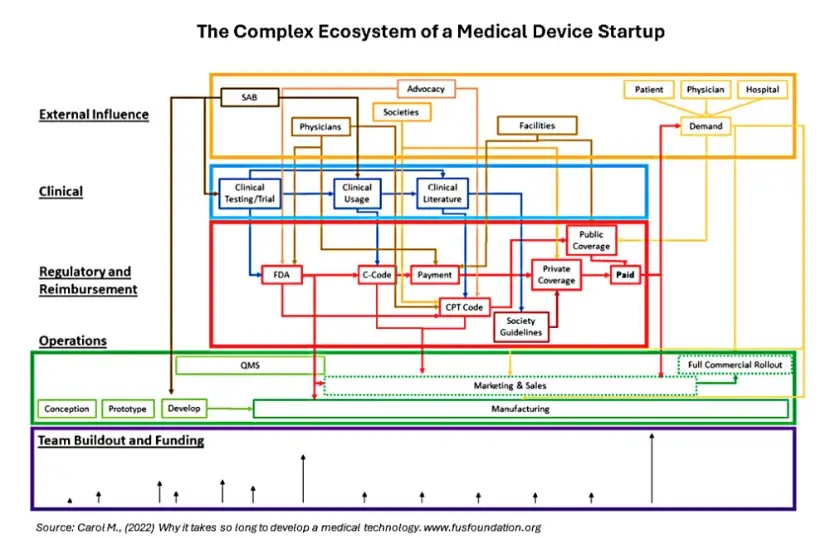
I use this analogy often, and it landed in nearly every conversation: You wouldn’t build a house without architecture. You’d never hand a contractor a pile of materials and say ‘figure it out.’ Yet that is exactly what many founders do with their regulatory and clinical pathway — and then they wonder why investors keep asking the same hard questions they can’t answer cleanly.
Strategy isn’t the thing you buy after the round. Strategy is often the reason the round closes.
#2) “I’ve already gotten advice on that.” This one was harder to sit with. Because in several cases, the advice those founders had received was not just incomplete — it was wrong. Meaningfully, potentially company-endingly wrong.
I will say this: the regulatory and clinical space is full of people who position themselves as experts. Not all of them are. And early-stage founders, who often don’t know what good guidance looks like, can’t always tell the difference until it’s too late.
When founders have been pointed in the wrong direction and built their entire strategy around it, they don’t just have a knowledge problem. They have a momentum problem. Changing course feels like starting over. It feels like admitting failure. It feels expensive, even when staying the course is exponentially more expensive.
Bad advice is not neutral. It has compounding consequences. And founders who have followed it are often the hardest to help, not because they’re wrong, but because they don’t yet know they are.
#3) The founders who had been burned. This was the most unsettling pattern of the week. And honestly, the most important one for me to sit with.
A meaningful number of the founders I spoke with had already worked with a CRO or regulatory consultant. They had spent significant money. And they had received, in their words, very little in return. Generic deliverables. Missed timelines. Consultants who disappeared after the contract was signed. Work that didn’t move the needle.
These founders weren’t resistant to strategy. They were resistant to anyone who looked like the people who had already let them down.
I found myself in the position of having to overcome distrust that wasn’t mine. Trust that had been broken by others in my industry, in some cases before I ever sat down across from them.
I built a company specifically to be the answer to that experience. Exclusive focus on early-stage companies. No generic frameworks. No disappearing acts. Outcomes-oriented from day one. But you can’t lead with that. You have to earn the right to say it. RCI Global Partners
The Moment I Almost Shifted
I’ll be honest with you, because that’s the only way this conversation is worth having.
Somewhere around day two, I started thinking about what it would mean to shift my focus. To work exclusively with later-stage companies. Companies that have already lived through the consequences of not planning. Companies that are past the resistance phase and ready to execute.
It would be easier. The decision-making would be faster. The founders would already understand (and seek) the value.
I sat with that thought longer than I’m comfortable admitting.
And then I came back to something I’ve known since the beginning of this work: the gap that kills most MedTech and Biotech companies isn’t a later-stage problem. It’s an early-stage problem. It’s the 85-90% failure rate. It’s the companies that never make it to later-stage because they didn’t have the architecture to get there.
Later-stage is often just the cleanup operation. Early-stage is where the real work lives.
So, guess what? I’m not walking away from early founders. But I am going to ask more of them.
What I’m Asking of Early-Stage Founders
I want to meet you where you are. I genuinely do. That is not a sales line — it is a professional commitment I have made and kept across hundreds of engagements.
But meeting you where you are REQUIRES SOMETHING FROM YOU…
- It requires that you be honest with yourself about what you don’t know. That you separate the discomfort of investing in strategy from the very real cost of not having one. That you stop letting the memory of a bad consultant become the reason you go without strategy altogether.
- It requires that when you find someone who is genuinely built to help you — not to extract a fee, but to move your program forward — you give that relationship a real chance.
- You don’t have to have all the money right now. You don’t have to have all the answers. But you do have to want to be met.
Because I can build the architecture. I can map the pathway. I can help you build the clinical and regulatory story that closes the round and gets the product to patients.
What I can’t do is want it FOR you.
I’m still here. I’m still in this. And I’m still betting on early-stage founders — even the ones who aren’t ready to bet on themselves yet.
But this week reminded me: my job isn’t just to show up. It’s to keep raising the bar on what showing up actually means – for both of us.
See you next year at MedTech Innovator!
Shaherah Yancy , CEO RCI Global Partners