In today’s tighter funding environment, capital efficiency has become one of the most talked-about — and misunderstood — concepts in MedTech. In a recent feature by Med-Tech.World, Shaherah Yancy, CEO of RCI Global Partners, shared a clear message for founders: capital efficiency isn’t about spending less, it’s about spending with intent.
Capital Efficiency Is Strategic, Not Reactive
Many early-stage companies equate capital efficiency with cutting costs wherever possible. Yancy challenges this mindset, arguing that efficient companies are those that invest deliberately — aligning every dollar spent with long-term regulatory, clinical, and commercial goals. When spending decisions are tied to strategy, resources are used to actively reduce risk rather than simply extend runway.
Strategy Should Start Earlier Than Most Founders Think
According to Yancy, strategy isn’t something to “add later” once funding is secured. The most resilient MedTech companies plan their regulatory pathways, evidence generation, and commercialization approach early, even before major fundraising rounds. This early alignment helps teams avoid costly pivots, redundant work, and delays that can derail progress down the line.
Align Product, Evidence, and Market From Day One
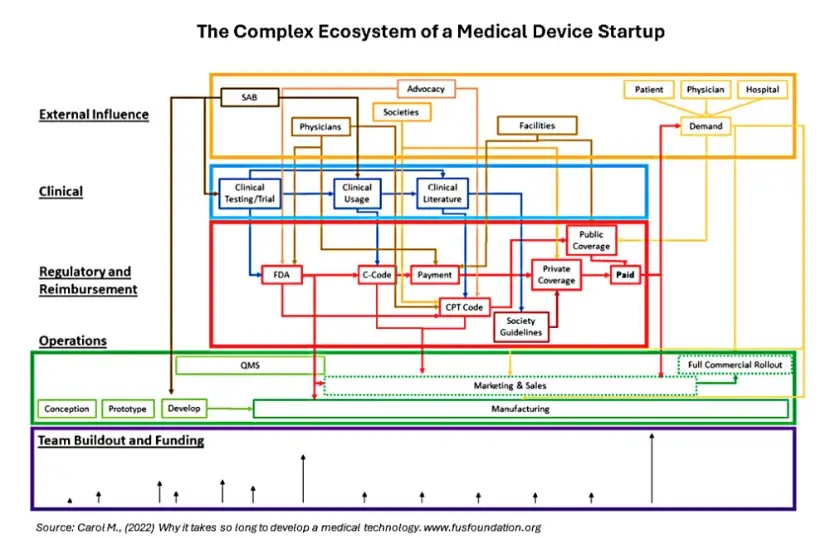
A recurring theme in the article is the danger of siloed thinking. When product development, clinical strategy, and commercialization planning operate independently, companies often end up spending more to fix misalignment later. Yancy emphasizes the importance of designing products with real-world use cases, reimbursement realities, and clinician workflows in mind from the outset.
Clinical Evidence Is an Asset — Not Just a Cost
Rather than viewing clinical studies as a regulatory checkbox, Yancy reframes clinical evidence as a core value driver. High-quality data strengthens regulatory submissions, supports reimbursement discussions, builds clinician trust, and provides credibility with investors. When evidence generation is planned strategically, it becomes a multiplier rather than a drain on resources.
Speed Alone Doesn’t Create Value
Finally, the article pushes back on the idea that moving fast automatically means being efficient. Achieving regulatory clearance quickly has limited value if there’s no plan for adoption, reimbursement, or integration into clinical workflows. Sustainable success comes from balancing speed with intentional planning.
The Takeaway
Capital efficiency in MedTech isn’t about minimizing spend — it’s about maximizing impact. Founders who invest early in strategy, alignment, and evidence position their companies to move faster and smarter, creating lasting value for patients, partners, and investors.